A recent paper from researchers at the American Cancer Society shows that most types of cancer in the USA have become less deadly over time, with the exception of colon & rectum cancers which is now killing more young people (under 50) than any other type of cancer.
This of course is of great concern to the Red Trouser Day charity as we focus our work on eliminating colorectal cancer.
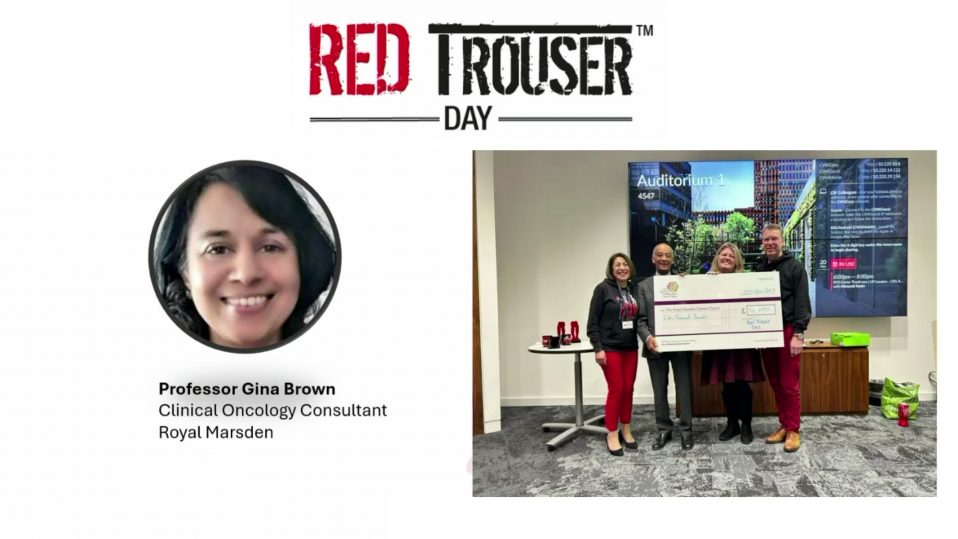
Friend of the RTD, Professor Gena Brown was asked to comment on the report, and you can read her thoughts below.
Overview of the research paper:
1. The Big Picture
For decades, colon cancer was seen mostly as an “older person’s disease.” However, while cancer deaths are actually going down for the general population (by about 44% since 1990), colon cancer is the “odd one out.” It is now killing more young people (under 50) than any other type of cancer, including breast and lung cancer.
2. Why is this happening?
Scientists aren’t 100% sure yet, but they have some strong theories. It seems to be a mix of:
-
Diet: Eating more processed foods, red meats, and sugary drinks.
-
Lifestyle: Being less active (sitting more) and higher rates of obesity.
-
The Gut “Environment”: Changes in our gut bacteria (the microbiome) or exposure to things like microplastics and certain chemicals may be playing a role.
-
Late Diagnosis: Younger people often ignore symptoms because they don’t think they can get cancer, and doctors may misdiagnose them with simpler issues like hemorrhoids or IBS. This means by the time the cancer is found, it is often more advanced.
3. What has changed for you?
Because of this trend, medical experts have lowered the recommended age to start regular screenings (like colonoscopies) from 50 down to 45. If you have a family history of colon cancer, you might even need to start earlier.
4. Red Flags to Watch For
The article stresses that you shouldn’t ignore your body just because you’re young. “Red flag” symptoms include:
-
Changes in bathroom habits: Constipation or diarrhea that doesn’t go away.
-
Blood: Any blood in your stool (it might look bright red or very dark/tarry).
-
Abdominal pain: Persistent cramping or gas pain.
-
Unexplained weight loss: Losing weight without trying.
-
Fatigue: Feeling unusually tired all the time.
The Bottom Line
While the news sounds scary, colon cancer is actually very treatable and even preventable if caught early. The most important thing for laypeople is to know your family history, pay attention to symptoms, and talk to a doctor about getting screened starting at age 45.
 Commentary by Professor Gena Brown:
Rates of cancer are rising in younger adults, but for most common cancers, fewer people are dying than in the past. Colorectal (bowel) cancer is a worrying exception. In the United States, deaths from colorectal cancer are increasing, even as treatments such as chemotherapy and radiotherapy are used more often.
One important reason is that bowel cancer often develops quietly. Many patients do not experience clear warning symptoms until the disease is advanced. Some tumours grow outwards through the bowel wall rather than into the bowel itself, meaning they may not cause bleeding or bowel changes that would trigger early investigation. As a result, even when cancer is found earlier, it may already be at a stage where cure is more difficult.
The growing number of younger people affected by colorectal cancer is likely linked to modern lifestyles. Rising obesity levels, low physical activity, poor diets, and environmental exposures may all weaken the body’s ability to prevent cancers from developing.
Despite major increases in the use of chemotherapy and radiotherapy, survival for colorectal cancer has not improved as expected. Most cancers that return do so within five years, and many patients with higher‑risk disease will experience recurrence. Yet large clinical trials have not consistently shown that more intensive drug or radiation treatment improves long‑term survival after initial diagnosis.
Part of the problem is that treatment decisions rely heavily on how accurately the cancer is staged at diagnosis. If staging is incorrect, patients may receive too much or too little treatment. The quality of surgery—which plays a crucial role in cure—is not always measured or reviewed consistently. After treatment, follow‑up and monitoring for recurrence also vary widely, even though early detection of returning cancer can save lives.
Reducing deaths from colorectal cancer will require more than simply increasing drug treatments. A broader approach is needed. This includes healthier diets and lifestyles, expanding bowel cancer screening to younger age groups, and ensuring that diagnosis, staging, surgery, and follow‑up care are consistently high quality across all hospitals.
In short, improving survival from bowel cancer depends on earlier recognition, more accurate assessment, better surgery, and careful long‑term monitoring—rather than relying mainly on stronger treatments after the disease has already advanced.
Professor Gina Brown MD FRCR FASCRS
Chair of Gastrointestinal Imaging
Department of Surgery and Cancer
Hammersmith Hospital
Further reading: